


Alternative drives in agriculture: life cycle impacts, soil effects and implementation pathways in the EU context

Alternative drives in agriculture: life cycle impacts, soil effects and implementation pathways in the EU context

0,00  Preis inkl. MwSt.

This white paper analyzes the future of agricultural technology at the intersection of economically driven market trends and agricultural science findings on soil health. The global tractor market continues its trend toward larger, more powerful, and heavier machines, driven by increasing farm sizes and labor shortages. At the same time, recent meta-analyses demonstrate significant yield losses due to soil compaction, particularly from high wheel and axle loads, the effects of which are long-term and sometimes irreversible.

Based on this discrepancy, the white paper identifies a structural conflict of objectives between short-term efficiency per working hour and long-term productivity per hectare. It outlines three realistic development paths: soil-friendly heavy machinery (“Smart Heavy”), autonomous light systems (“Light & Many”), and drone-based, tethered traction and application systems (“Aerial & Tethered Systems”). Artificial intelligence is understood as the central orchestration layer of future agricultural systems. The white paper concludes that sustainable productivity is achieved less through increasing machine weight than through intelligent system integration.

Category: Tag:

Description

Whitepaper

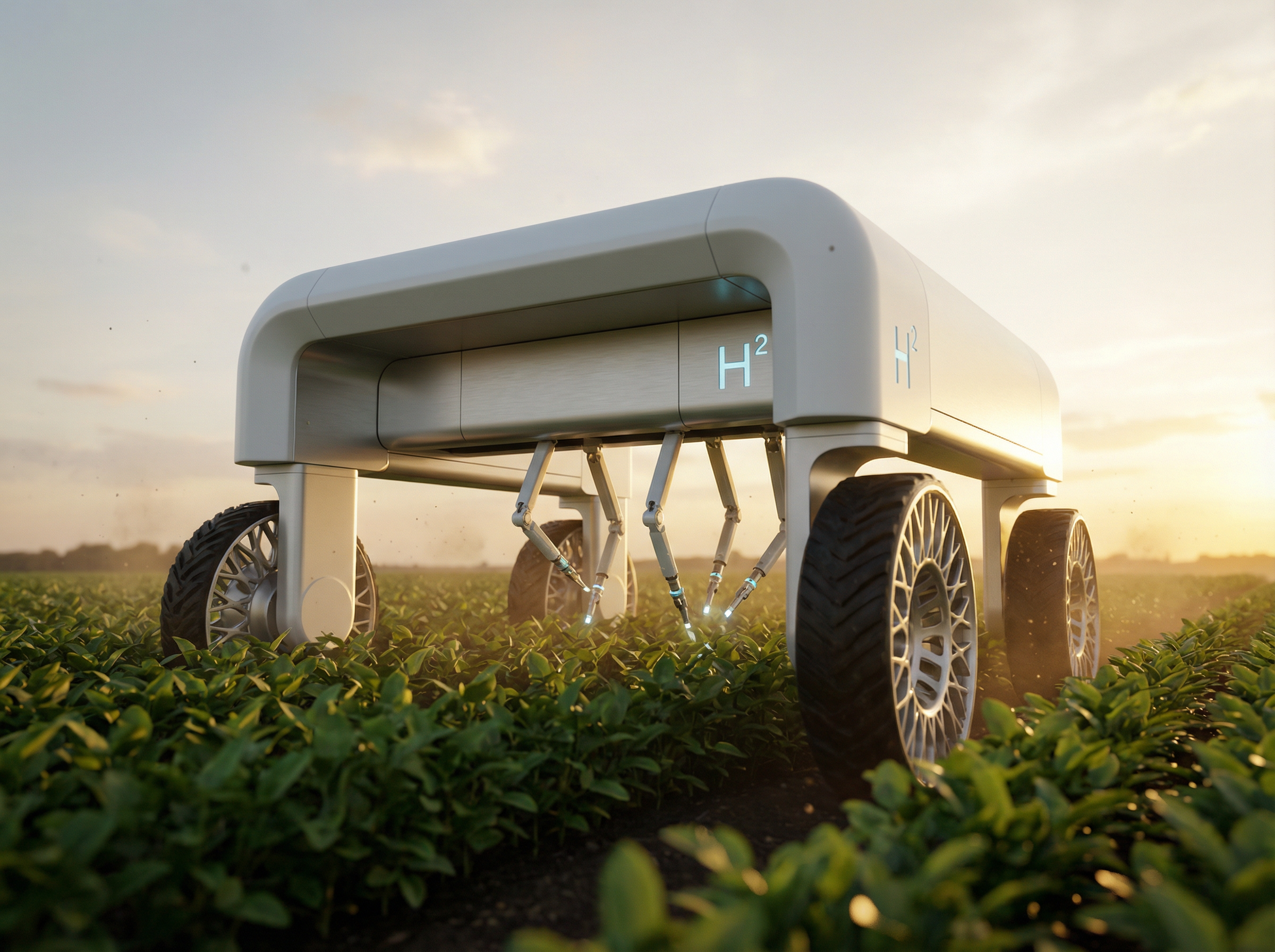
Decarbonizing agricultural machinery is technically feasible, but more complex than the often-repeated debate about “the right drive system.” Diesel, biofuel, battery-electric systems, and hydrogen each have different climate footprints, infrastructure requirements, and systemic impacts. A key finding is that the climate impact depends heavily on the specific energy pathway, while soil effects are primarily determined by machine weight, wheel loads, and the frequency of passes.

Battery-electric drives can achieve the lowest well-to-wheel emissions when powered by low-CO₂ electricity. However, simply replacing large machines with battery-electric systems can increase axle loads and thus the risk of permanent soil compaction. Hydrogen can offer advantages for high-performance applications, but its use is heavily dependent on the availability of renewable energy and suitable infrastructure. Bio-based fuels enable short-term emission reductions in existing machinery, but their use is highly dependent on raw material sourcing and land-use impacts.

The analysis shows that a successful transformation of agricultural drive systems will not be determined by a single technology. A regionally adapted system mix is ​​more likely: in the short term, efficiency improvements and sustainable drop-in fuels; in the medium term, battery-electric solutions for smaller and more predictable applications; and in the long term, new system architectures with lighter, partially autonomous machines.

The decisive factor lies not only in the energy source, but in the entire fieldwork system. Measures such as reduced machine weight, optimized tire and traffic management, and new work concepts can simultaneously support climate and soil protection goals, thus forming a key component of sustainable agriculture.

Reviews

There are no reviews yet.

Only logged in customers who have purchased this product may leave a review.

Go to Top