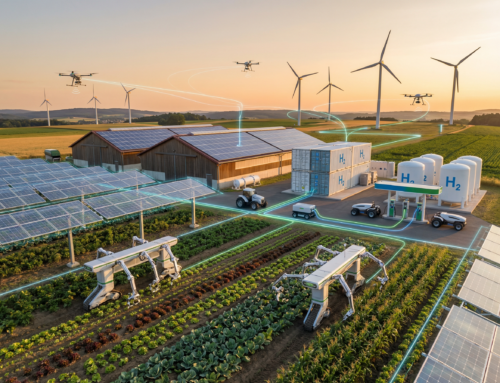



What if the future of agriculture resembled an ant colony more than a tractor?
For decades, the development of agriculture has followed a clear direction:
Bigger, wider, heavier.
- More performance.
- Greater working width.
- Greater efficiency per driver.
The logic behind this is understandable. If a person is to cultivate increasingly large areas of land, the machines inevitably become larger.
But what happens when the technical parameters change?
Autonomous systems, sensor technology, artificial intelligence, and high-performance batteries now make possible something that was considered science fiction just a few years ago:
Maschinen müssen nicht mehr zwangsläufig von Menschen gefahren werden.
This raises a fundamental question:
Do machines even need to be large anymore?
From Machine to Colony
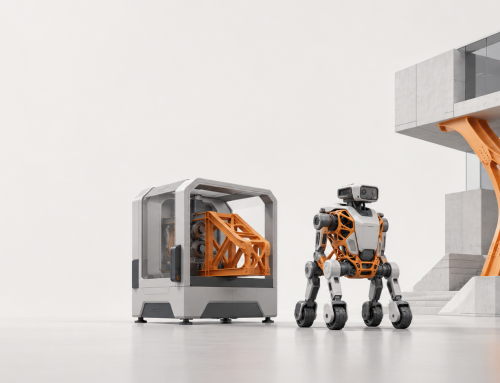
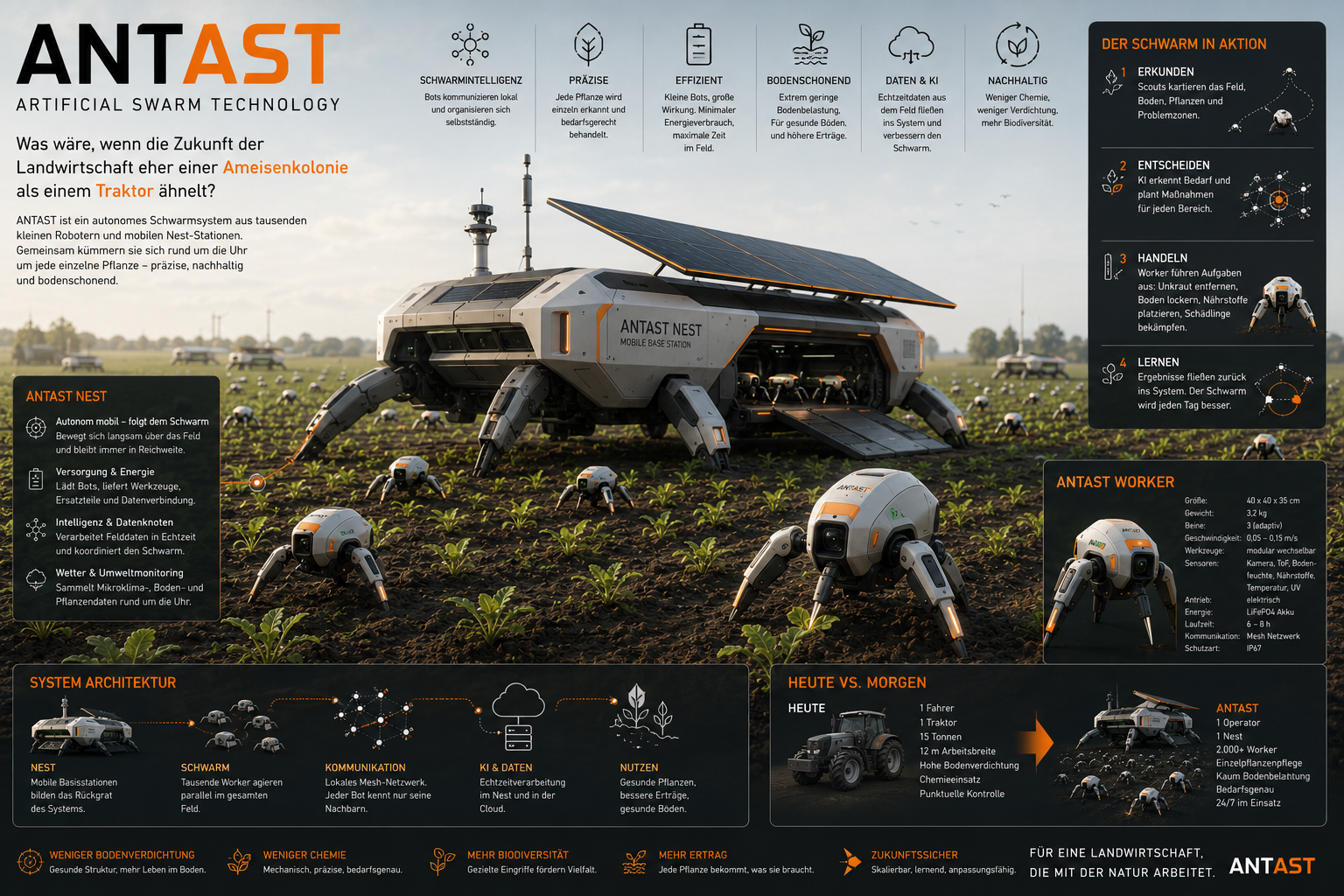
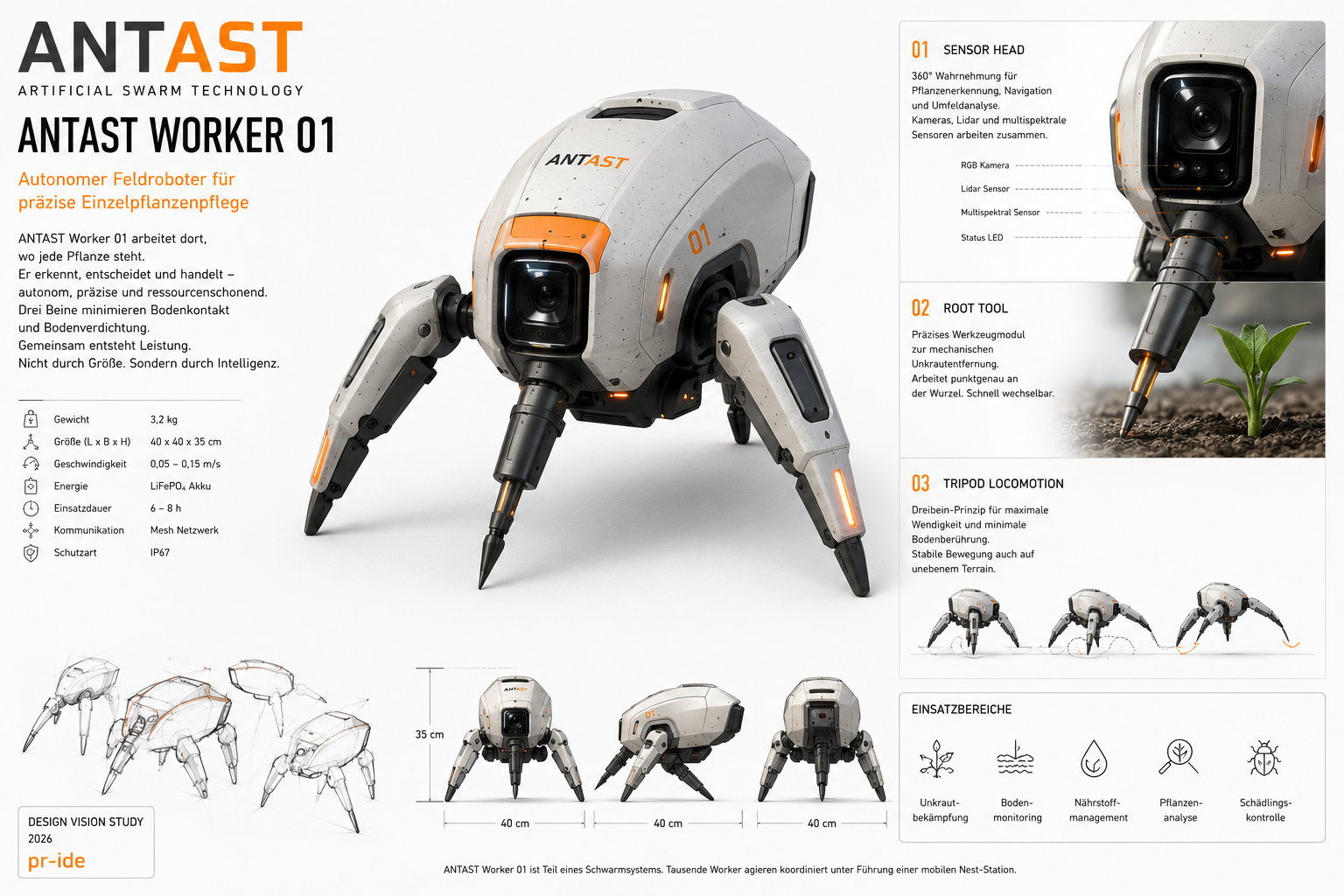
In nature, complex tasks are often not solved by a single actor. Ants build trails, organize logistics, defend territories, and care for their offspring. No single ant possesses an overall plan. Intelligence emerges from the interaction of many small units. The ANTAST study applies this concept to agriculture. ANTAST stands for Artificial Swarm Technology. A swarm of thousands of small field robots takes the place of a single large machine. Each individual robot performs simple tasks:
- Identify plants
- Identify weeds
- Mechanical weed control
- Collect soil data
- Share information with the swarm
Only the sum of these activities produces the actual output.
The Wandering Nest
Most current robotics concepts continue to be based on the classical machine principle. Autonomous tractors follow the same paths as their human-operated predecessors. ANTAST takes this approach a step further.
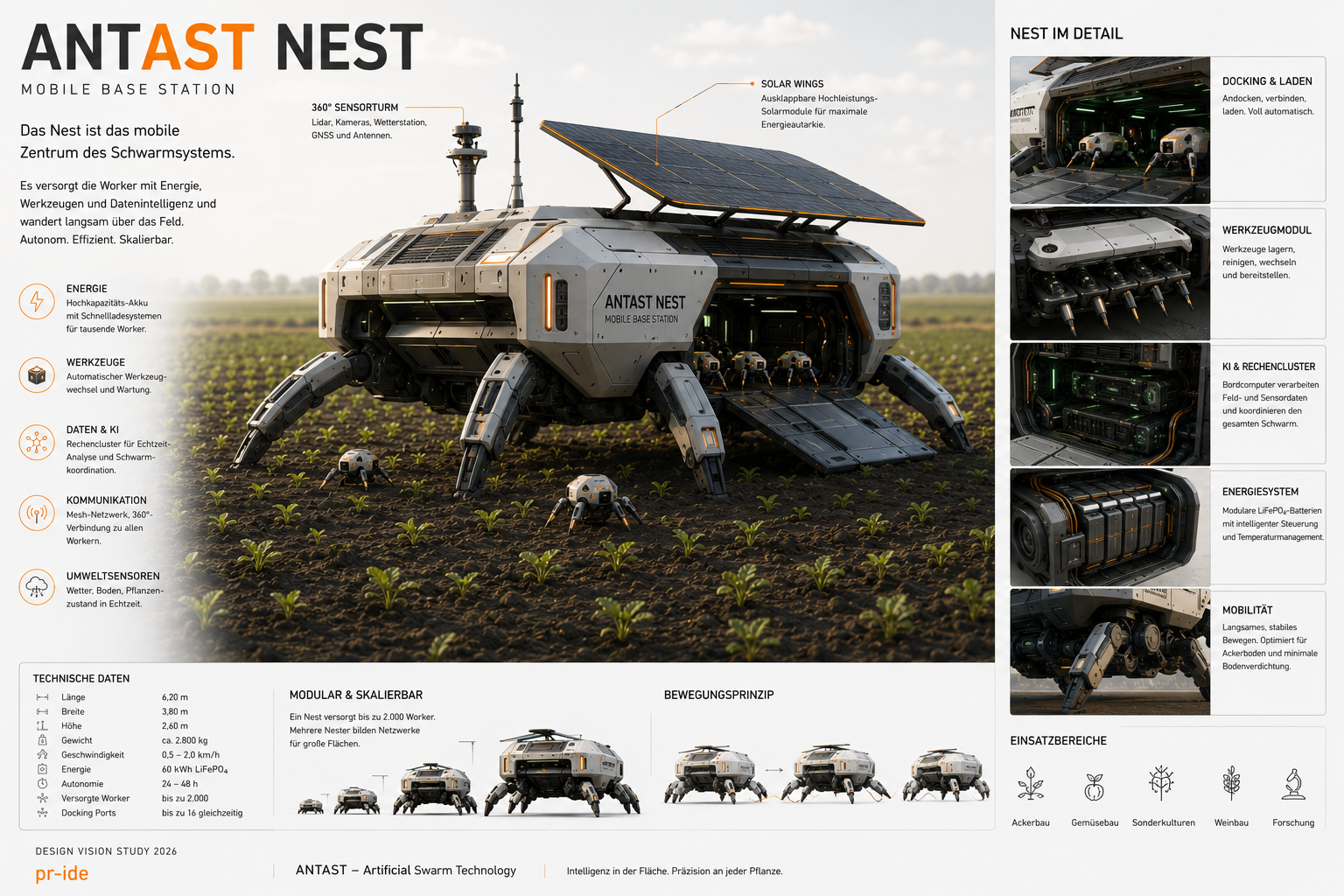
At the center is a mobile base station—the “Nest.” The Nest moves slowly across the field and supplies the robots with:
- Energy
- Tools
- Data processing
- Weather information
- Spare parts
This keeps the travel distances for the individual robots short. The bots require smaller batteries, become lighter, and can operate continuously in the field.
Less weight, more intelligence
For years, agriculture has been grappling with a conflicting set of objectives. Large machines boost productivity, yet they also increase ground pressure.
ANTAST pursues a different approach. Instead of packing ever-increasing power into a single machine, intelligence is distributed across many small units. The focus shifts from the hectare to the individual plant.
The working width is not the main focus.
But rather the precision.
A design study
ANTAST is not a product announcement. The study is conceived as a thought experiment. It explores how agriculture might evolve if robotics, swarm intelligence, and autonomous systems were taken to their logical conclusion. Whether the agriculture of the future will actually look like this remains an open question.
The intriguing question is:
Why do we often imagine the future as a larger version of the present?
And what happens if we try to think in completely new ways instead?